UK defends seizing shadow fleet tanker after Putin threat

The UK government has defended its seizure of a Russian “shadow fleet” oil tanker in the English Channel, after Russian President Vladimir Putin threatened to “respond in kind”.
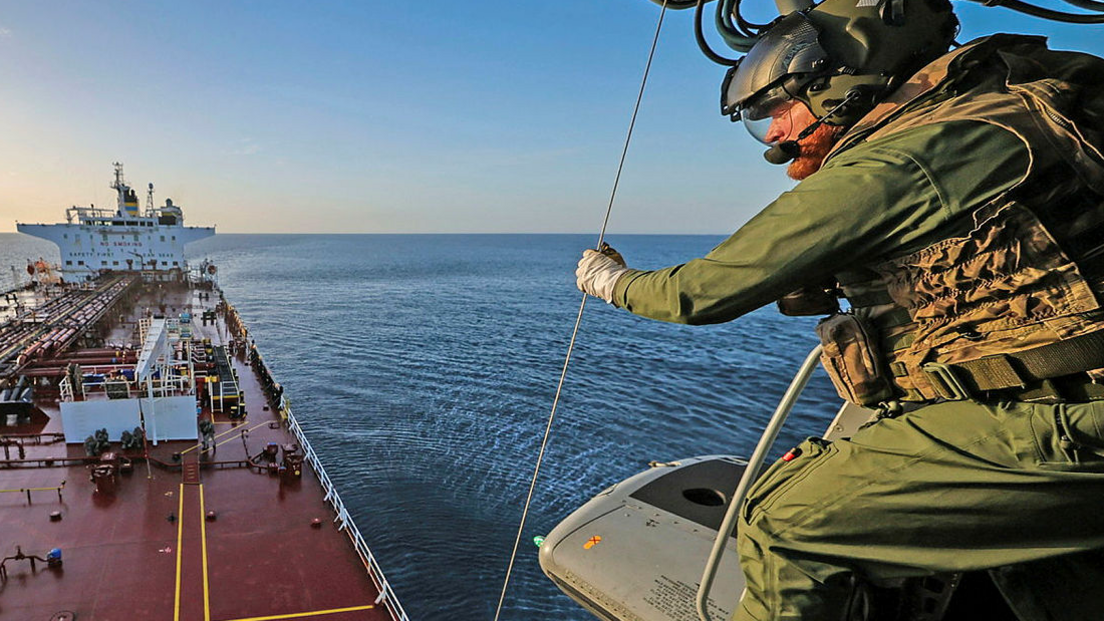
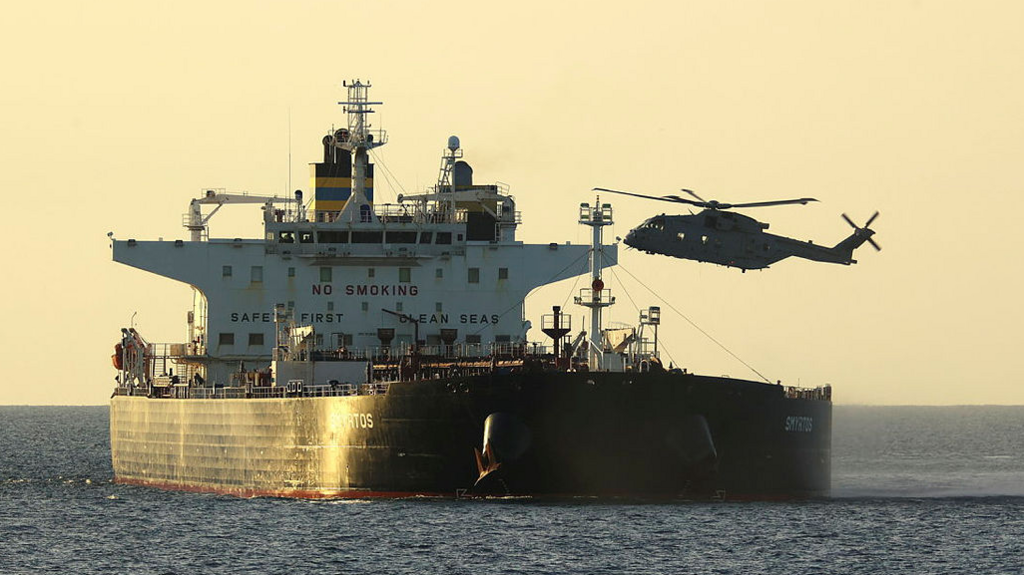
The Smyrtos has been anchored off Weymouth after Royal Marines Commandos intercepted and boarded the vessel in a first-of-its-kind operation to disrupt the sanctioned tanker in June.
The vessel’s captain, Ajay Pant, has been charged with breaching Russian sanctions, accused of directly or indirectly supplying or delivering prohibited Russian oil.
Overseeing Russian navy drills in the Pacific Ocean, Putin scolded Western countries for “seizing our vessels”, branding such action “nothing other than piracy and banditry”.
Western nations allege Russia has been operating a “shadow fleet” of hundreds of vessels to evade international sanctions imposed on its oil exports.
These vessels stand accused of using complex ownership structures and various tactics to obscure the origin of their cargo, masking their link to Russia.
The UK Ministry of Defence says Russia has a fleet of more than 700 vessels, responsible for carrying 75% of the country’s sanctioned oil.
This oil is a “critical lifeline for the Kremlin” in “sustaining Russia’s illegal war” in Ukraine, the MoD says.
On Wednesday, Putin warned Western countries against seizing more of these tankers, saying: “If these plans are put into practice, we will have to respond in kind.
“And not necessarily in the waters where raids on our ships and vessels are planned, but wherever we deem it necessary and appropriate, anywhere.”
Viktor Liina, commander of Russia’s Pacific Fleet, accused Western countries such as Britain and France of operating their own “shadow fleets”.
“We have the capacity to inspect and detain vessels of unfriendly states and their shadow fleets, and interagency cooperation is in place, ready to begin addressing these challenges,” Liina said.
In response to Putin’s comments, the UK government said Britain’s armed forces and law-enforcement officers had boarded the Smyrtos “in full accordance with international law”.
“The UK is disrupting and deterring shadow fleet vessels and their harmful maritime activity which is fuelling Russia’s war with Ukraine,” a government spokesperson said.
The spokesperson said unlike Russia’s shadow fleet, “UK armed forces and commercial vessels operate firmly in line with international maritime law”.
To play this video you need to enable JavaScript in your browser.
This video can not be played
The Smyrtos continues to be detained by the Department of Transport at a port near Weymouth in southern England, where is it being monitored by British authorities.
The ship owner is responsible for the upkeep of the vessel, including provision of supplies for crew members on board.
But 22 out of the original 25 crew members were repatriated in July.
Putin’s warning comes as the European Union intensifies pressure on Russia’s shadow fleet.
In his remarks to Russian sailors, Putin singled out the EU, accusing member states of violating international maritime law and “attempting to restrict the movement of vessels belonging to our economic operators”.
Anitta Hipper, the EU’s foreign affairs spokesperson, said European nations would not be deterred by Russia’s “threats”.
“For us, it is a priority to limit Russia’s capacity to generate revenue to finance its war, including curbing the activity of the shadow fleet and its enablers,” Hipper said.
She said the EU would “continue to work with our partners to call out Russia’s irresponsible and dangerous actions and to uphold international law”.
Many Western countries imposed sanctions on Russian energy following Russia’s full-scale invasion of Ukraine in 2022.
Moscow has been accused of dodging them by shipping oil on aged tankers often with obscure ownership or insurance.
To combat this tactic, in 2024 the EU began sanctioning individual shadow fleet vessels – “Putin’s dark fleet”, as the European Council, the bloc’s top group of national leaders, put it.
More than 630 vessels are sanctioned as of mid-August 2026, meaning they are banned from EU ports.
Meanwhile, several individual European countries have been seizing or detaining Russian-linked vessels or have carried out boardings or detentions when sanctions violations are suspected.
Most recently, the Italian navy, in conjunction with other EU countries, boarded a tanker in the central Mediterranean suspected of not being entitled to fly the flag it claimed.
Although that inspection did not result in a seizure of the vessel, others have.
Since the start of the year, nine shadow fleet tankers suspected of circumventing sanctions have been seized around the EU.
-
Royal Marines board Russian shadow fleet oil tanker in English Channel
-
15 June
-
-
What happened to Russian ‘shadow fleet’ tanker crew?
-
26 June
-


Published at Thu, 13 Aug 2026 15:05:12 +0000